

Moving into a new apartment and wanting curtains is one of those universal renter experiences. The problem: your lease says "no holes in walls," or you're just not ready to commit to large screw holes in a place you might leave in a year.
Here's the practical guide — what actually works, what landlords actually care about, and how to hang real curtains (not just sad sheers) without risking your deposit.
What Does Your Lease Actually Prohibit?
Most leases say something like "no alterations to the property" or "no holes in walls without permission." But landlords vary enormously in what they actually enforce. Some charge for every small hole at move-out; others couldn't care less about small drywall screw holes that get spackled.
The safest approach: don't make holes you can't explain. But "tiny pin holes" from modern brackets are a very different conversation than anchor bolts in your wall.
The Best Renter-Friendly Methods
1. Pin-Guide Brackets (Least Damage, Best Hold)
Modern curtain rod holders like the Evermount use small alignment pins — not traditional screws or adhesive — to mount to your wall. The pins are so small they barely register as damage. You get the stability of drilled brackets without the drywall destruction.
Installation takes about 5 minutes per window. You press the included pins in, level the bracket, and your rod rests securely. These are designed specifically for renters who want real curtains without real consequences.
2. Tension Rods (Zero Contact With Walls)
For windows where the frame has at least 1-2 inches of depth, a tension rod needs nothing but pressure against both sides. The problem is that cheap tension rods slip. Use quality ones with rubber ends, and make sure you're getting the right size — a rod extended to its maximum length loses a lot of pressure.
3. Curtain Track Systems (Ceiling-Mounted)
IKEA's KVARTAL and similar systems mount to the ceiling (or existing curtain tracks if your apartment has them). Ceiling holes in your lease territory? Check first. But many landlords are less sensitive about ceiling holes than wall holes, and tracks look incredibly clean.
What to Avoid
- Adhesive hooks on textured walls — they don't bond well and will pull off chunks of paint when removed
- Standard Command strips for rods — not rated for the weight, and removal can still damage paint
- Tape of any kind directly on wall paint — almost always pulls paint on removal, especially on older apartments
- Overtightened tension rods in drywall recesses — can crack drywall near window corners
How to Hang Curtains Step-by-Step (Pin Bracket Method)
- Measure — mark where you want the rod (typically 4-6 inches above the window frame)
- Mark bracket positions — one on each side, same height
- Use the included level — most quality holders come with a mini level or guide pins for alignment
- Press in the pin guide — the pins self-locate into the wall
- Snap on the bracket — clicks onto the pin guide
- Insert the rod and hang curtains
What About Wide Windows?
Wide windows (over 60 inches) need a center support bracket in addition to the two end brackets. Most renters skip the center support — that's what causes rods to bow in the middle with heavy curtains. A third pin-bracket in the center solves this completely.
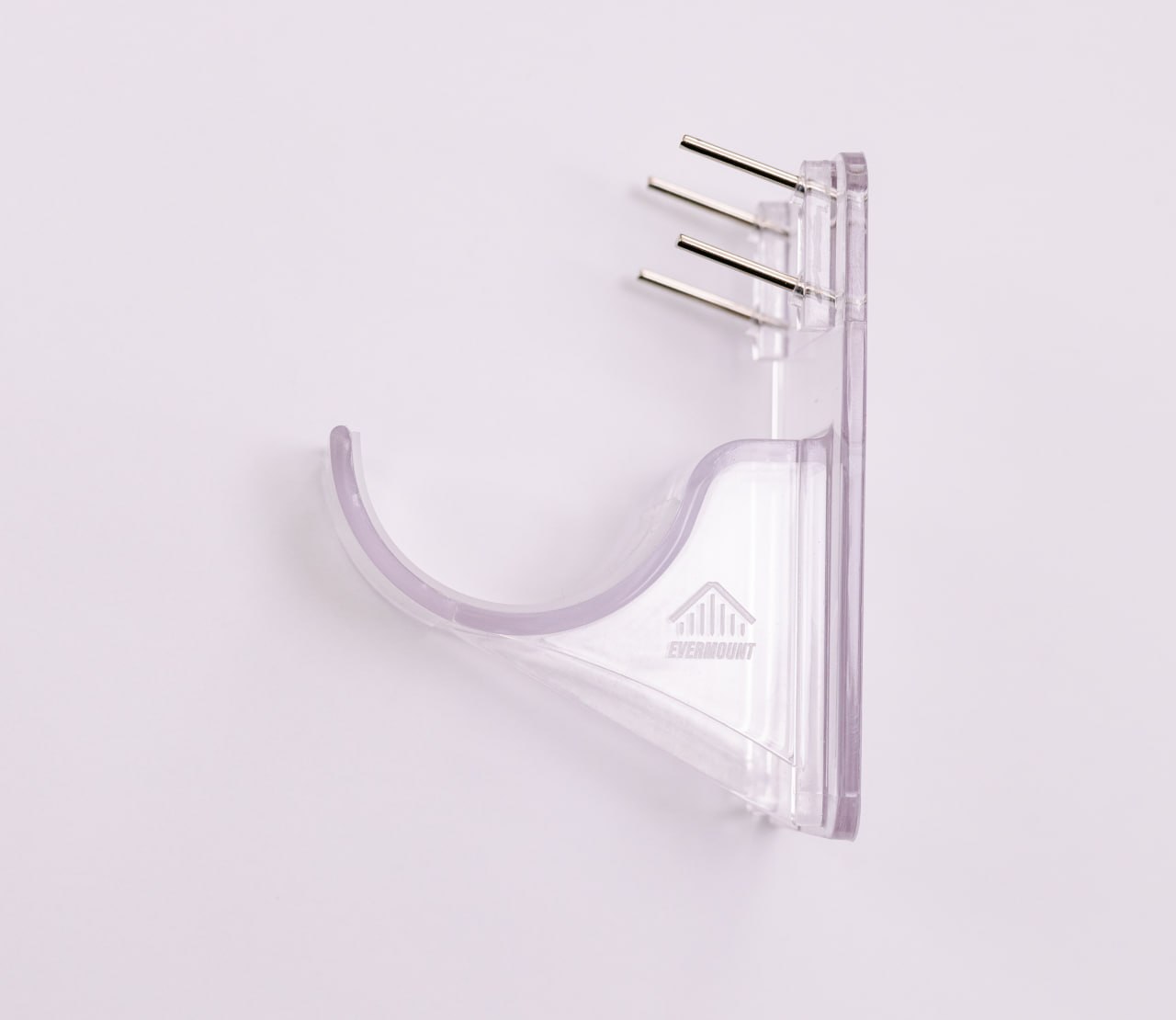
Evermount Curtain Rod Holders (8-Pack)
Designed for renters: pin-guide installation leaves near-zero visible damage. Comes with a built-in level and pin guide so your rod hangs perfectly straight. Works with standard 1.25" curtain rods.
Check Price on Amazon →At Move-Out: Dealing With What's Left Behind
Even with pin-based brackets, you'll have tiny holes. The good news: a $3 tube of spackling paste, a 5-minute touch-up, and you're done. Many renters never even bother — pin holes are typically below the threshold of chargeable damage in most states.
If you used adhesive brackets and they've left marks, a magic eraser and warm water handles most adhesive residue without damaging paint further.