

Concrete and masonry walls — common in basements, urban apartments, converted industrial spaces, and some older buildings — present a real challenge for no-drill installations. Let's be realistic about what works and what doesn't.
Why Concrete Is Different
Standard drywall and concrete are fundamentally different materials for hanging purposes:
- Concrete is too hard for pin-based brackets designed for drywall
- Concrete texture is porous and irregular, reducing adhesive bond strength
- Concrete is often painted with masonry paint that can flake, further weakening adhesive
- Temperature and moisture transfer differently through concrete, which can degrade adhesive bonds faster
Option 1: Tension Rod Inside Window Frame (Best for Most Cases)
If your window frame is wood or metal and provides enough depth, a tension rod inside the frame is your cleanest solution — the frame material doesn't matter. The rod wedges between the frame sides, not the concrete wall.
This works best for:
- Windows with at least 1.5 inches of frame depth
- Light to medium curtains (sheers through medium-weight)
- Single-window installations where width fits within tension rod range
Option 2: Industrial Adhesive on Smooth Concrete Block
If the concrete is smooth block (not rough poured concrete) and has been painted, strong two-part construction adhesive can work. Gorilla Adhesive or 3M structural adhesives bond to concrete better than standard pressure-sensitive adhesives.
Important caveats:
- Surface must be clean and free of flaking paint or dust
- Cure time is longer — 72 hours minimum before loading weight
- Removal will likely take paint and possibly surface material with it
- Use this only where you have permission to potentially damage the surface
Option 3: Ceiling Track Systems
In rooms with concrete walls, the ceiling may offer easier mounting. Ceiling-mounted curtain track systems are a stylish and practical solution. If the ceiling is drywall or drop ceiling panels, standard mounting applies. Even on concrete ceilings, specially designed concrete anchors can allow installation.
IKEA's VIDGA and KVARTAL are popular ceiling-mount systems with a clean modern look.
Option 4: Freestanding Curtain Rod Stands
For renters who can't damage walls OR ceilings, freestanding floor-to-ceiling curtain rod stands offer a genuinely no-contact solution. They tension between floor and ceiling using their own pressure. More expensive, but truly zero wall contact.
What Doesn't Work Well on Concrete
- Standard Command strips (not rated for porous or textured surfaces)
- Pin-based drywall brackets (won't penetrate masonry)
- Basic 3M adhesive brackets (surface adhesion too weak on rough concrete)
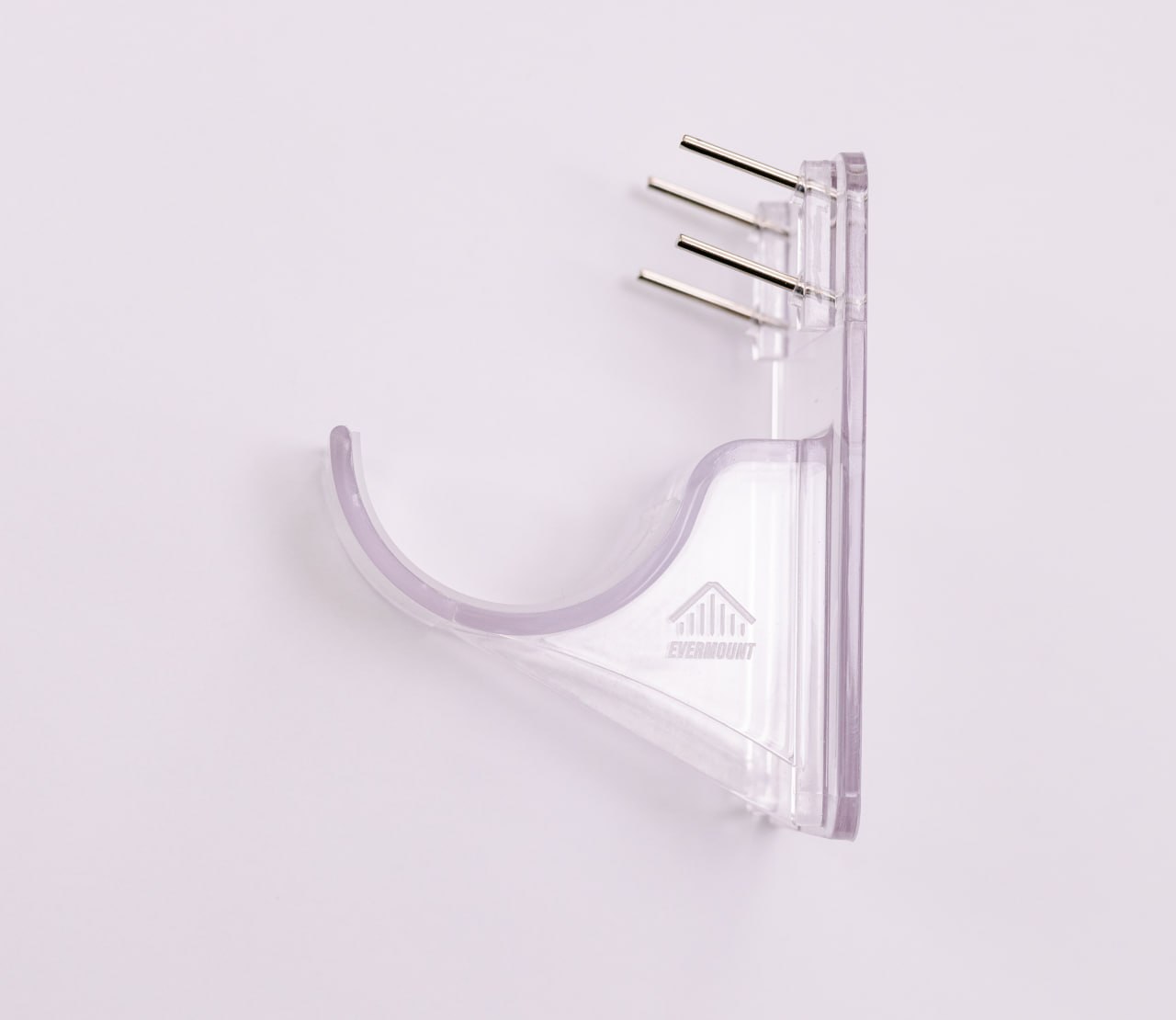
Evermount Curtain Rod Holders
If you have drywall in any rooms of your home (common in concrete-wall buildings), Evermount pin-guide brackets are the best no-drill option. For concrete walls specifically, check if the window frame itself has enough depth for a tension rod first.
Check Price on Amazon →The Honest Advice
For concrete walls, truly damage-free curtain hanging is harder than drywall. The most reliable no-damage solution remains tension rods inside the window frame. For rooms where that's not possible, you'll either need to compromise on something (using industrial adhesive that damages on removal) or use a freestanding stand system.