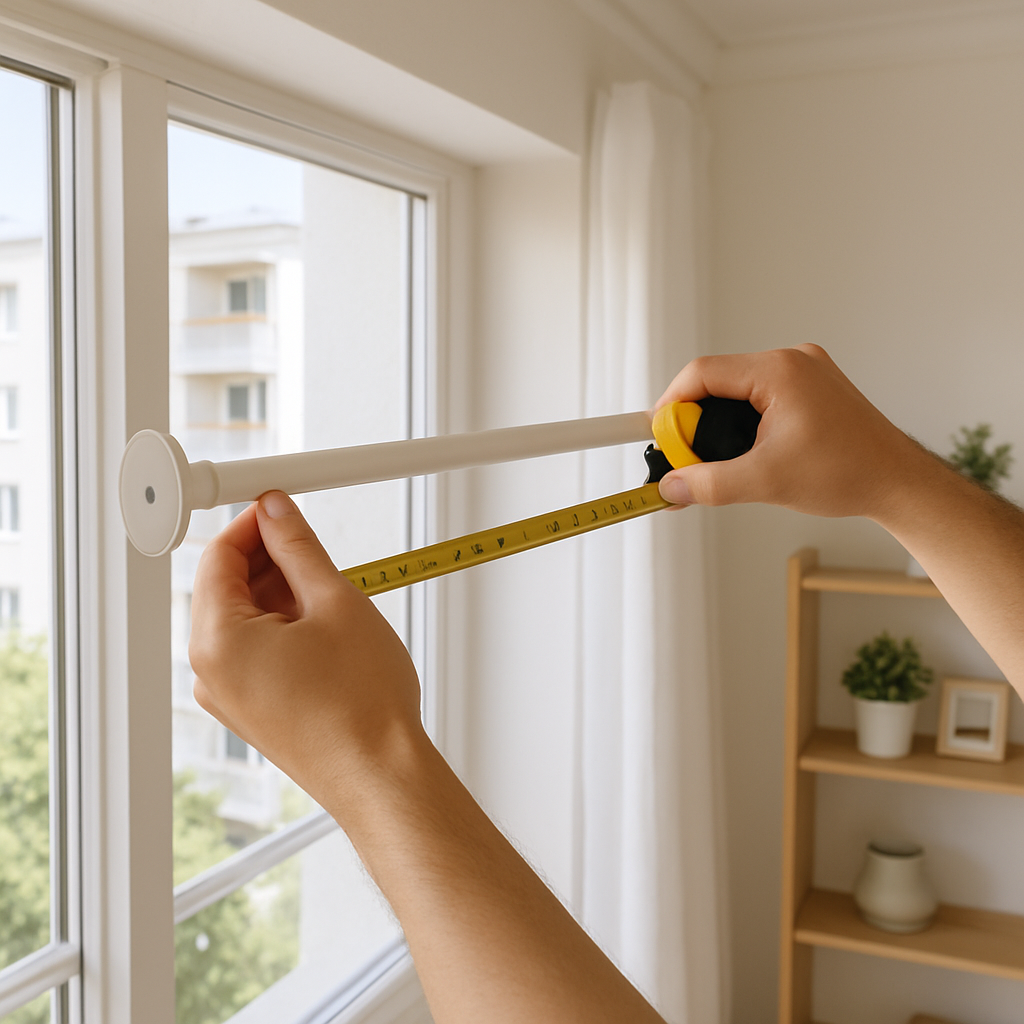

If you're a renter, live in a place with concrete walls, or simply don't want holes in your drywall, the good news is that hanging curtains without a drill is completely doable — and it's gotten significantly better in recent years.
The old days of choosing between "drill holes" or "use a tension rod that falls down at 3am" are over. Let's walk through your real options.
Method 1: Pin-Based No-Drill Brackets (Best Overall)
The newest and most reliable approach uses tiny pin guides instead of adhesive or large screws. These holders press small pins into drywall — leaving holes barely visible to the naked eye — while providing the same sturdy hold as traditional drilled brackets.
Unlike adhesive brackets that can peel off walls over time (especially in humid rooms), pin-based holders stay put and can be removed cleanly. They work on standard drywall and most painted surfaces.
Method 2: Adhesive Curtain Rod Brackets
Adhesive-backed brackets use 3M or similar industrial-strength sticky pads to mount directly to your wall. They work well on smooth painted drywall but can struggle on textured walls or in humid bathrooms.
Watch out for: Most adhesive brackets are rated for rods up to 3/4" diameter and lighter curtains. Heavy blackout curtains on a wide span will stress the adhesive over time. Always check the weight rating before buying.
Method 3: Tension Rods (Inside the Frame)
A tension rod that fits snugly inside your window frame needs zero hardware. They're perfect for cafe-style curtains, light sheers, and narrow windows. The downside: they only work where your window frame has enough depth to wedge the rod, and they tend to slip on very smooth frames.
Method 4: Curtain Clips on Window Trim
If your window has a raised trim or casing around it, you can use specialized brackets that hook or clip onto the outside edge of the casing. No holes required. Brands like "Kwik-Hang" have made this into a product — you literally tap brackets onto the top of your window casing with your thumb.
Method 5: Curtain Tape and Velcro
For lightweight panels or in rooms where traditional rods won't work at all (odd angles, ceiling heights), adhesive velcro tape along the top of the window can hold light curtains in place. Not ideal for heavy drapes, but creative and completely damage-free.
What About Command Strips?
Standard Command strips aren't really designed to hold the weight of a curtain rod — they're meant for frames and lightweight items. However, Command makes specific curtain rod holder products that are sized for rods up to 5/8" diameter. They can work for very light curtains, but aren't reliable for blackout curtains or wide windows.
Which Method Is Right for You?
- Renting and worried about deposit: Pin-based brackets or tension rods
- Smooth drywall + lightweight curtains: Adhesive brackets
- Window with wood trim: Tap-on casing brackets
- Heavy blackout curtains: Pin-based or properly rated adhesive
- Bathroom or high-humidity room: Tension rod or pin-based (avoid adhesive)
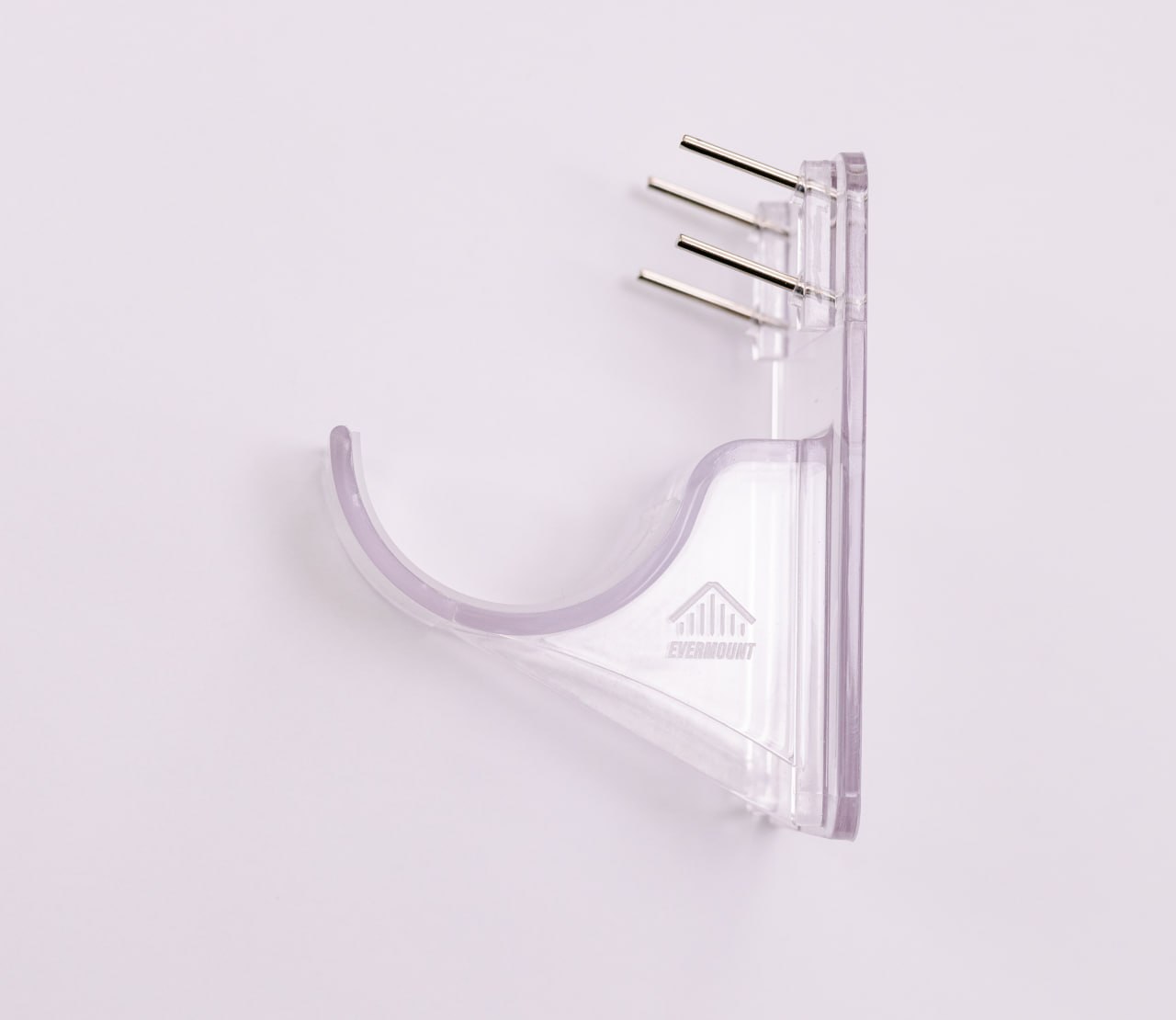
Evermount Curtain Rod Holders (8-Pack)
Uses tiny pin guides instead of adhesives or large screws. 5X stronger hold than adhesive-only brackets. Works with 1.25" rods. Includes level for perfect alignment. Near-zero damage — no sticky residue, no peeling paint.
Check Price on Amazon →The Bottom Line
You don't need to drill to hang curtain rods, and you don't need to accept tension rods that fall off the wall constantly. Modern pin-based brackets offer the stability of traditional installation without the damage. If you're in a rental or just want to preserve your walls, they're the smart choice.