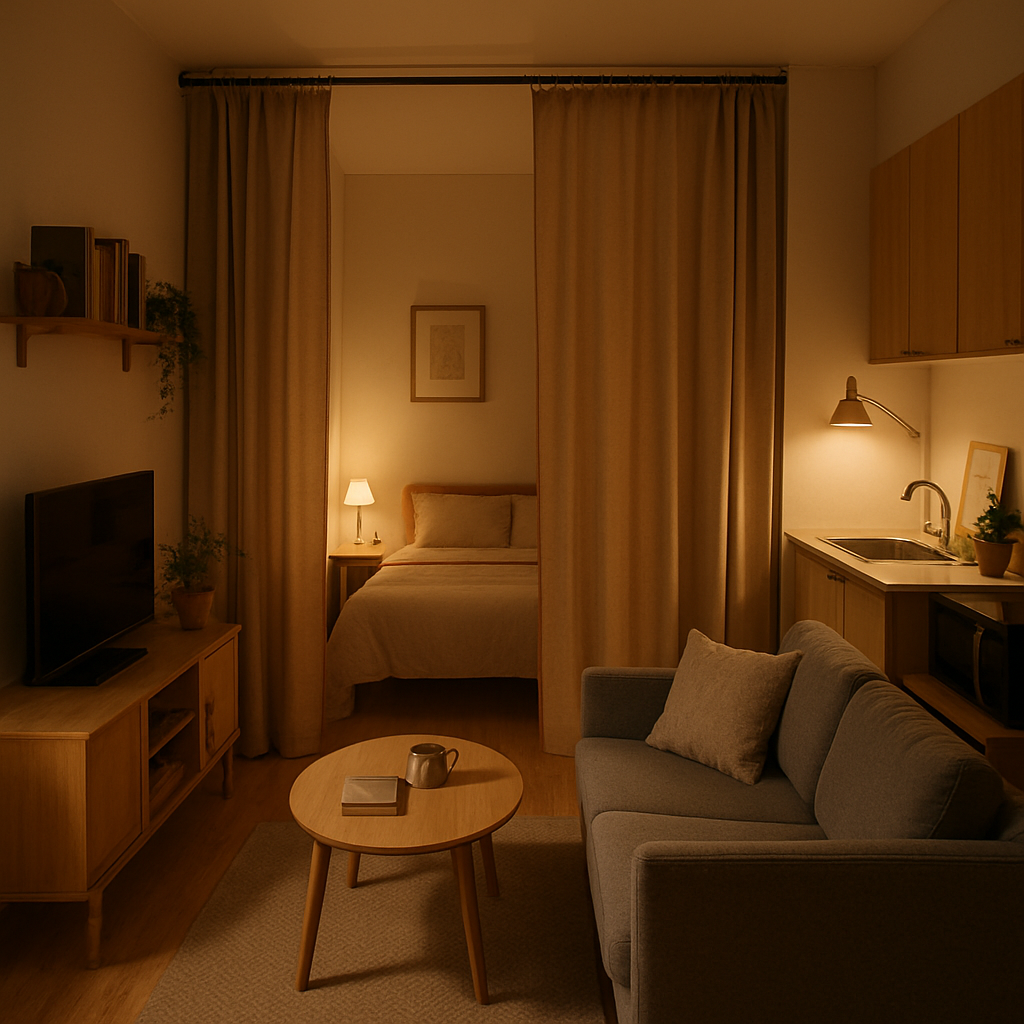

Studio apartments are the ultimate constraint environment for curtain hanging: small rooms, no room for error, rental rules, and usually minimal budget. Here's what works.
The Essentials First: Privacy and Light Control
In a studio, curtains often do double-duty — privacy from outside plus creating visual separation between sleeping and living areas. Prioritize your bedroom window first (blackout if you can), then consider room dividers second.
Bedroom Window (Privacy + Blackout)
For the window you sleep near, go with pin-based brackets (Evermount) and blackout panels. The tiny pin holes patch invisibly at move-out. Adhesive brackets work too on smooth walls, but verify your wall texture first.
Room Divider Curtains
Creating a bedroom area in a studio typically requires a ceiling-mounted track — not a wall-mounted rod. Ceiling drywall is easier to anchor and keeps the rod out of the walking path. Look for tension-based ceiling tracks (no drilling) or peel-and-stick ceiling mount options.
Budget Approach: Tension Rods First
If you're not sure how long you'll be in the space, start with tension rods. They're the cheapest, easiest to install, and leave literally zero trace. Upgrade to pin-based brackets if the tension rod keeps falling or you need heavier curtains.
Visual Trick for Small Spaces
Hang curtains high (close to ceiling) and wide (extending well past the window frame). This makes windows look bigger and ceilings look higher — two things every studio desperately needs.
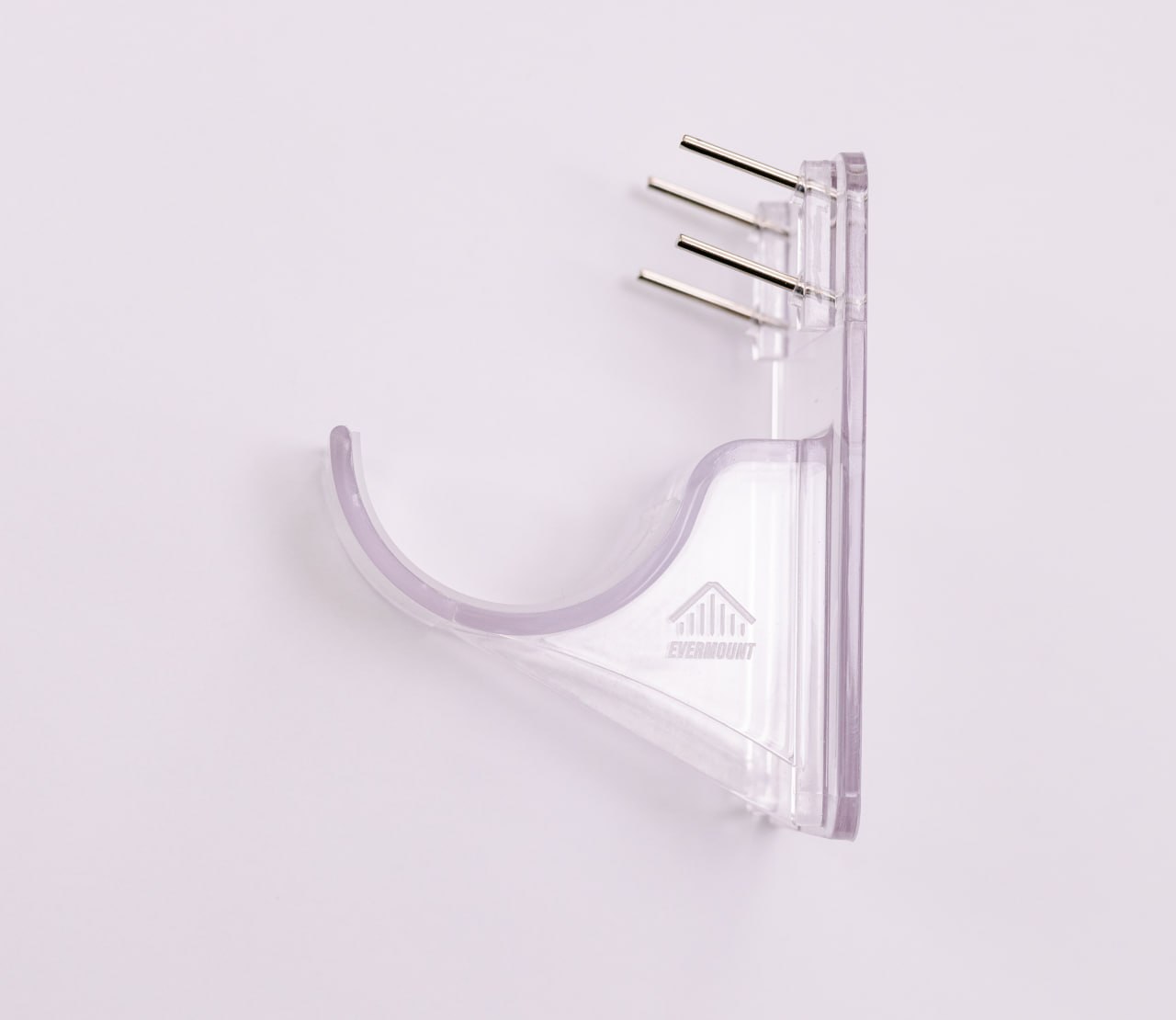
Evermount No-Drill Curtain Rod Holders
5X stronger than adhesive brackets. Uses pin alignment — no residue, no peeling, works on textured walls. Includes level tool. The no-drill solution that actually holds.
Check Price on Amazon →